
Magenspiegelung / Gastroskopie
Kontrolle und Vorsorge in Wien
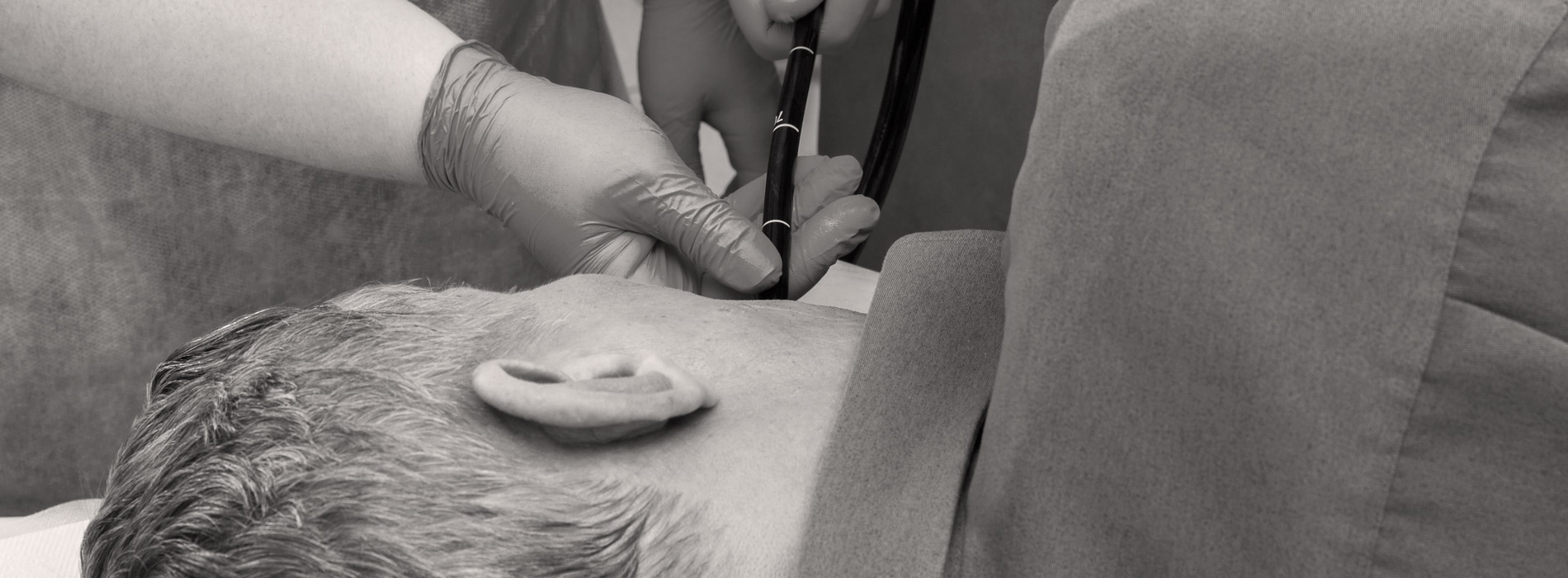
Eine Magenspiegelung (Gastroskopie) wird zur Abklärung von Beschwerden an der Speiseröhre, dem Magen oder dem Zwölffingerdarm und auch zur Vorsorge durchgeführt. Dabei wird ein ca. 5mm schmaler Kunststoffschlauch (Gastroskop), welcher mit Licht und einer Kamera ausgestattet ist, in den Rachen eingeführt.
Auf einem Monitor werden die Bilder der Kamera wiedergegeben. Dank dieser Untersuchungsmethode wird eine aussagekräftige Diagnose möglich, die Sie zur Abklärung von Beschwerden oder zur Krebsvorsorge benötigen.
Die Magenspiegelung kann in der Regel ambulant durchgeführt werden. Ab etwa 6 Stunden vor der Untersuchung soll keine Nahrung oder Flüssigkeit mehr aufgenommen werden. Die Untersuchung selbst ist schmerzfrei, kann für Sie aber durch ein Beruhigungsmittel oder eine Kurznarkose erleichtert werden.
Fragen und Antworten zur Magenspiegelung
- Can I drive after the examination?
If a sedative has been administered, you are not allowed to drive on the same day. If you rely on a car, we recommend that you arrange to be picked up after the examination.
- When is a gastroscopy performed?
We perform a gastroscopy when certain symptoms in the gastrointestinal tract need to be evaluated.
- What preparations are required?
The examination is performed on an empty stomach. To allow for a reliable assessment, the area being examined must no longer contain any food residue. This means that, as a rule, you should not eat or drink anything for 6–8 hours before the examination.
- Is a gastroscopy painful?
No. A gastroscopy may be perceived as uncomfortable, but it is generally associated with little to no pain.
- When can I eat and/or drink again?
If your throat was anaesthetised, you should wait after the examination until the numbness has completely worn off. In most cases, you can eat and drink again after about 60 minutes. This reduces the risk of choking.
- When can I resume sport?
If the examination was performed without sedation, you can resume physical activity immediately after leaving the office. If a sedative was used, you should allow your body some rest for the remainder of the day.
- How does a gastroscopy work?
A gastroscopy is usually performed on an outpatient basis. For the examination, a thin plastic tube (gastroscope) equipped with a light and camera is inserted into the throat. The gastroscope is then gently advanced through the oesophagus into the stomach and/or duodenum. The camera transmits the images to a monitor. Air is introduced to make any changes more clearly visible. If necessary, tissue samples can be taken directly using small forceps attached to the gastroscope. After the examination is complete, the gastroscope is carefully withdrawn.
- How long does the procedure take?
On average, the examination takes between 10 and 15 minutes.
- What are the risks?
Complications during gastroscopy are very rare. These may include, for example, injuries to the oesophagus, stomach, or duodenum, as well as cardiac arrhythmias. Most commonly, patients notice a slight numb sensation in the throat area and associated hoarseness after the examination. However, this usually improves very quickly.
Sie haben Fragen oder möchten eine Beratung zum Thema Magenspiegelung?
über Ihre Mitteilung über das Kontaktformular.