
Colonoscopy in Vienna – safe and gentle
Colonoscopy
Screening and preventive care in Vienna
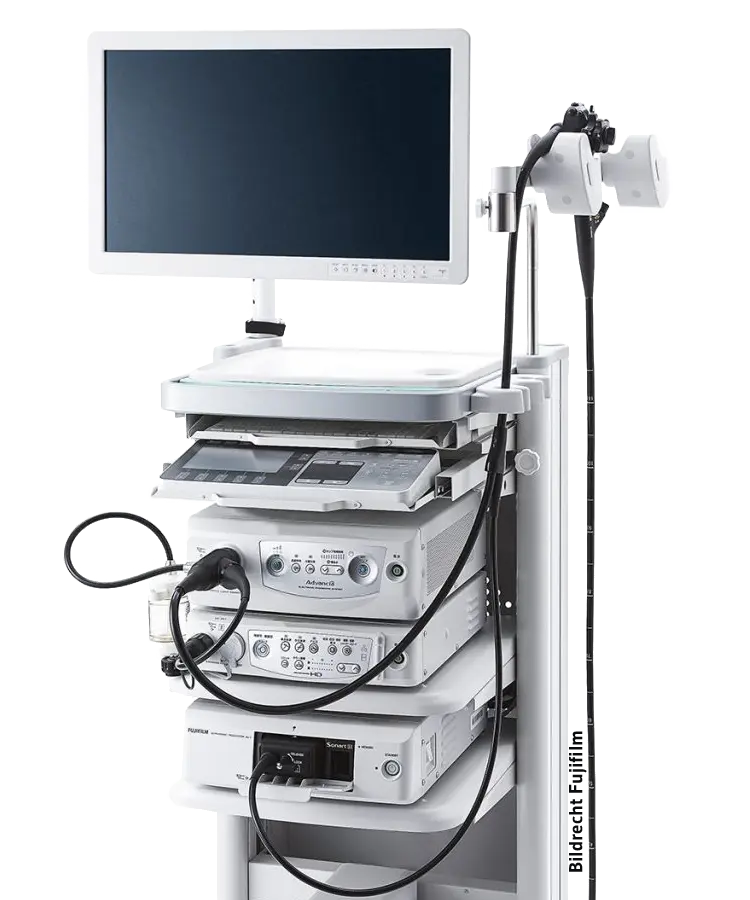
A colonoscopy (also known as a bowel examination) is an examination of the large intestine using a colonoscope equipped with a light and camera. The images captured by the camera are displayed on a monitor, allowing for a detailed view of the inside of the bowel. This enables a reliable diagnosis for clarifying symptoms or for colorectal cancer screening.
If polyps are detected during the colonoscopy, they can often be removed during the same procedure. Tissue samples (biopsies) can also be taken if necessary.
To prepare for the examination, a laxative solution must be taken the day before and on the day of the procedure. The examination can be made more comfortable with a sedative or a short anaesthetic.

Our services
Gentle examination
The colonoscopy is performed using modern equipment and is designed to be as comfortable as possible for you.
Early detection of diseases
Changes in the bowel can be detected early and often treated immediately.
High diagnostic accuracy
Colonoscopy allows a precise assessment of the intestinal mucosa.
Outpatient procedure
The examination is usually performed on an outpatient basis – you can go home afterwards.
Short examination time
The actual examination usually takes only about 20–30 minutes.
Personal care
From preparation to follow-up consultation, we provide individual support at our office.
Frequently asked questions about colonoscopy
- How does a colonoscopy work?
A colonoscopy is usually performed on an outpatient basis. During the examination, a colonoscope (endoscope) approximately 1 cm in diameter, equipped with a light and camera, is carefully inserted through the anus. Air is then introduced through the colonoscope, which expands the bowel and allows for a better view. The camera transmits images to a monitor, enabling a detailed examination of the bowel.
- How long does the procedure take?
On average, the examination takes between 20 and 30 minutes.
- What are the risks?
Colonoscopy is considered a safe and gentle diagnostic procedure. Complications occur very rarely. In theory, bleeding or injury to the intestinal mucosa or bowel wall may occur.
- Can I drive after the examination?
If a sedative has been administered, you are not allowed to drive on the same day. If you rely on a car, we recommend that you arrange to be picked up after the examination.
- When is a colonoscopy performed?
The examination is recommended from the age of 45 as part of preventive screening, or earlier in case of symptoms or a family history of increased risk.
- What preparations are required?
For a reliable examination, the bowel must be as clean as possible. Therefore, a laxative solution must be taken the evening before and on the day of the colonoscopy. In addition, plenty of fluids must be consumed. This preparation empties the bowel to the point where only clear fluid is passed over time. You may eat again only after the examination.
- Is a colonoscopy painful?
No. A colonoscopy may be perceived as uncomfortable, but it is generally associated with little to no pain.
- When can I eat and/or drink again?
In most cases, you can eat and drink again about 60 minutes after the examination. However, after sedation we recommend starting with light meals and avoiding alcohol on the same day.
- When can I resume sport?
If the examination was performed without sedation, you can resume physical activity immediately after leaving the office. If a sedative was used, you should allow your body some rest for the remainder of the day.